BOARD GAME PRODUCTION
MONDAYS & THURSDAYS
7:30 PM AEST
11 JUN 2026 - 13 AUG 2026
DURATION:
8 WEEKS
MONDAYS & THURSDAYS
7:30 PM AEST
Design, manufacture, deliver. Gain the hands-on skills to navigate production and bring your game from prototype to playable reality.
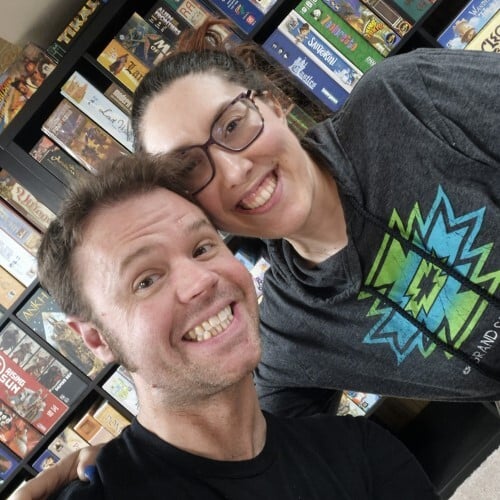
Led by Karl Lange, an experienced board game designer and developer — master the practical steps and tools that transform creative concepts into high-quality, market-ready games.
THIS COURSE IS FOR YOU, IF...
-
YOU ARE A GAME DESIGNER READY TO GO FROM PROTOTYPE TO PRODUCT
You’ve built the mechanics. You’ve tested the loops. But turning your game into a manufactured product — without blowing the budget or missing critical production details — is a different challenge. We’ll give you the practical know-how to navigate manufacturing, calculate real costs, avoid expensive mistakes, and confidently move from concept to shelf-ready game.
-
YOU MANAGE PROJECTS AT A SMALL GAME PUBLISHER
You juggle timelines, files, and factory emails, and one miscommunication can derail everything. Here, you’ll sharpen your production workflow, strengthen technical conversations with manufacturers, and build systems that keep quality high and surprises low. Less chaos, more control.
-
YOU ARE AN ENTREPRENEUR IN PRINT, MARKETING, OR PRODUCT SERVICES
You see the board game market growing, and you want in. But offering production support requires more than good intentions. This board game design course equips you with the technical literacy, process clarity, and manufacturing insight needed to provide turnkey production solutions that game designers trust and pay for.
Our students work in 1600+ companies worldwide

Through collaborative workshops, prototype builds, and structured playtests, you’ll define your vision, combine mechanics with purpose, implement your game in Tabletop Simulator, write a clear rulebook, and refine it all into something people would really want to play.
Dissect modern classics like Catan, Dominion, Gloomhaven, Wingspan, Root, Ticket to Ride, and moreto understand what makes mechanics click, themes resonate, and player retention stick. Analyse the best decisions and apply them directly to your own design.
Your endgame: a fully realised, pitch-ready board game package. You’ll finish with a polished sell sheet, a playable prototype, a structured rulebook, a production RFQ, and a confident pitch. Not just a cool idea, but a game that’s scoped, tested, cost-aware, and ready to enter the real world.
Karl Lange
Portfolio- Board Game Designer, Developer & Founder of Ark Angel Games
- Designed and developed tabletop games with 14 titles signed, 4 released, and multiple developer credits to his name
- Lead and supported Australia’s design community through 9 years on the Tabletop Game Designers Australia (TGDA) committee
- Built and run influential playtest programs, including Incubator (Melbourne) and Incubator (Online), helping designers refine and launch stronger games
- Earned the 2024 TGDA Mate Award for leadership, collaboration, and meaningful contributions to the Australian tabletop industry
- Won major international design competitions, including the Cardboard Edison Award (2021) and XV Games Smart Filler Game Design Contest (2020)
In this opening class, we’ll set the table for your design journey — aligning expectations, unpacking the course structure, and clarifying what your final playable prototype and pitch will require. You’ll understand the roadmap ahead so you can design with intention from turn one.
- Meet your instructor
- Course structure
- Assignments & final project overview
Before you design your magnum opus, you need to speak the language of the industry. This class grounds you in the terminology, product categories, and market forces shaping modern tabletop. We’ll analyse trends, identify white space in the market, and position your concept where it can actually compete.
- Terminology & concepts
- Product categories
- Trends & opportunities in the market
- Software & platform options
- Workshop: In groups, share a game that has influenced your original concept. Discuss how it inspired your current design.
This is where inspiration becomes intention. You’ll clarify your game’s scope, player count, complexity, and core hook. We’ll explore whether your design should be theme-first, mechanics-first, or experience-first and how each path affects development.
- The design process
- Defining your scope
- Product vision
- Defining target audiences
- Theme, mechanics, or experience first?
Mechanics are the verbs of your game. In this session, we’ll dissect popular systems — from deck-building to worker placement — and examine why they endure. More importantly, you’ll learn how to combine and evolve mechanics to create something fresh without reinventing the wheel (unless your game needs a rondel).
- Popular mechanics
- Designing for different skill levels
- Adaptation & innovation of mechanics
- Making the most of your components
- Workshop: Divide into breakout rooms. Brainstorm a unique combination of at least 2 mechanics and how they could function together.
In this class, we’ll break down player psychology, immersion, accessibility, and emotional pacing. You’ll learn how to align theme and mechanics so they reinforce each other rather than compete, and how to design for different player archetypes without diluting your vision.
- Player motivations
- Accessibility
- Defining target audiences
- Player archetypes and preferences
- Thematic and mechanic integration
- Narrative elements & player immersion
Assignment #1: Game Scope/Product Vision
Define the scope/product vision for your game including target audience, theme, mechanics, hook, limitations, etc.
If players have to fight your layout, they won’t fight the dragon. This class focuses on clarity at the table — visual hierarchy, intuitive navigation, and iconography that communicates instantly. You’ll move from rough prototype to functional design, learning rapid iteration techniques that save time and sanity.
- Principles of visual hierarchy
- Layout design & navigation best practices
- Iconography & symbol design
- Rapid prototyping techniques
Behind every elegant design is ruthless iteration. We’ll dive into probability, dominant strategies, feedback loops, and catch-up mechanics to ensure your game is tense but fair. You’ll learn structured playtesting methods that transform feedback into actionable design changes.
- How to playtest
- Balance fundamentals
- Catch up mechanics
- Dominant strategies
- Feedback loops
Assignment #2: Tabletop Simulator Implementation
Implement your prototype in Tabletop Simulator.
In this session, we’ll explore how odds, uncertainty, loss aversion, and variable rewards shape player behaviour. Understanding these psychological levers allows you to design tension, excitement, and satisfaction intentionally.
- Key concepts
- Understanding odds
- Randomness vs uncertainty
- Loss aversion
- Variable Ratio Payout schedule
- Class Case Study: World of Warcraft
A brilliant game can fail at the rulebook. You’ll learn how to translate complex systems into a teachable, intuitive manual that anticipates edge cases and eliminates ambiguity.
- Structure, organisation, & logical flow
- Clarity & conciseness
- Visual aids & examples
- Teaching the game
- Addressing edge cases & ambiguities
Assignment #3: Playtesting & Action Plan
Playtest your game in groups. Gather feedback, and write your action plan for improvement.
Designing is only half the battle. We’ll map the publishing ecosystem: traditional pipelines, crowdfunding strategies, distribution channels, and compliance requirements. You’ll understand how your production decisions impact cost, logistics, and retail viability.
- Traditional publishing pipeline
- Self-Publishing & crowdfunding
- Distribution & retail
- Product safety & compliance
Your pitch is your critical hit. This class equips you with the professional assets and storytelling precision needed to convince publishers your game deserves shelf space. From sell sheets to sizzle reels, you’ll craft a pitch that’s clear, confident, and strategically tailored.
- Creating a Sell Sheet
- Creating professional prototypes
- Pitch Videos & sizzle reals
- Tailoring your pitch
- Mastering the elevator pitch
Assignment #4: Basic Rulebook
Write a basic rulebook for your game with simple turn examples.
Protect your creation before it hits the table. You’ll explore copyright, trade marks, licensing agreements, and collaboration contracts. Understanding these legal frameworks ensures you can confidently work with artists, developers, and IP holders.
- Copyright law for game elements
- Trademarking titles & logos
- Understanding licensing agreements
- Key clauses & considerations
- Working with IPs
- Working with developers, artists & graphic designers
Art direction transforms mechanics into atmosphere. You’ll define your game’s aesthetic identity, explore typography and readability, and draft professional illustration briefs that communicate clearly to artists and collaborators.
- Developing a cohesive visual style
- Communicating theme & mood
- Typography & readability
- Understanding artistic styles
- Developing an art / illustration brief
Assignment #5: Sell Sheet
Develop a sell sheet for your target audience (publisher / consumer / retailer).
This class bridges dream and delivery. You’ll research manufacturers, select components strategically, and understand printing processes and quality control. We’ll demystify the RFQ process so you can move from prototype to production-ready product.
- Component selection
- Identifying & researching manufacturers
- manufacturing standards & processes
- Printing Process
- Developing an RFQ
- Quality control procedures
A great game needs players. You’ll develop a marketing strategy that builds community before launch, leveraging social platforms, conventions, and influencers to create momentum and sustained engagement.
- Developing a strategy
- Building an online presence
- Pre- and post-launch marketing tactics
- Working with influencers & reviewers
- Attending Conventions
Assignment #6: Game RFQ
Develop an RFQ for your board game.
In this class, you’ll calculate pricing, profit margins, shipping logistics, and funding strategies. We’ll discuss sustainable business planning so your game can thrive beyond launch day.
- Networking & professional communication
- Creating a business plan
- Understanding pricing & profit margins
- Crowdfunding & exploring funding options
- Shipping + Fulfillment
- Managing finances & tracking sales
This is your endgame encounter. You’ll present your refined prototype, polished sell sheet, and confident pitch to the class. It’s your chance to demonstrate not just a great idea — but a production-ready, market-aware board game concept.
- Practice your pitch live in class (optional)
Final Assignment:
Using the feedback received throughout the course, bring it all together with a polished sell sheet, a playable prototype, and a pitch that’s ready to wow.
What our students say
"I really enjoy the format of the course. Lectures with real life examples and an ongoing case study. Also built in 20 minutes at the end of each class for questions is helpful."

"Overall I'm impressed with the level of detail and explanation around particular topics and subjects. There's a real depth to each module which for learning allows the information to stay in your brain."

"The group activities, they allow us to interact and exchange ideas, plus the way it is structured is challenging and mind twisting as we collaborate in different parts of the ideation."

"I enjoyed the structure of the class. I like how we learned about a topic and practiced it in the workshops. It’s helped me to apply what I learned!"