COMIC BOOK WRITING COURSE
TUESDAYS & THURSDAYS
7 PM AEST
27 AUG 2026 - 8 OCT 2026
DURATION:
7 WEEKS
TUESDAYS & THURSDAYS
7 PM AEST
Turn raw ideas into a comic script built to grab editors, artists, and readers.
Learn directly from Cavan Scott, NYT bestselling author who’s written for Star Wars, Batman, Doctor Who, Assassin’s Creed, & more, and master the craft, structure, and professional workflow behind publishable comics.
THIS COURSE IS FOR YOU, IF...
-
YOU ARE AN ASPIRING DC/MARVEL WRITER
Breaking into the industry can feel impossible from the outside. This comic book writing course teaches you how to structure pages, write visually, pitch confidently, and create scripts that meet real industry standards. By the end, you’ll have work that shows you are ready for a seat at the writer’s table.
-
YOU ARE AN ILLUSTRATOR, SCREENWRITER, OR STORYBOARD ARTIST
You already understand storytelling, but comics demand a completely different rhythm. This course helps you adapt your existing creative skills into long-form comic scripting with stronger pacing, sharper panel storytelling, and commercially viable story structures. You’ll learn how to create characters and worlds with the depth needed for ongoing series, adaptations, and franchise growth.
-
YOU WANT TO BUILD YOUR FREELANCE BRAND
Ready to take on bigger opportunities? This comic writing course helps you sharpen both your scripts and your professional presence through industry-focused workflows, editor-facing pitch techniques, and portfolio-driven development. You’ll refine your ability to collaborate, communicate visually, and handle feedback like a working professional. The final project will be your calling card for higher-level work.
Our students work in 1600+ companies worldwide

This course is built around active creation. Through structured assignments, workshops, and script exercises, you’ll apply every concept directly to your own original comic project. Each stage mirrors the real workflow professional writers use when developing stories for artists, editors, and publishers.
Dive into in-depth case studies on Batman’s character construction, Lex Luthor’s villain design, and Iron Man’s three/four-act story structure. Break down the storytelling mechanics behind iconic comics while learning how professionals handle pacing, dialogue, visual flow, and high-stakes narrative development.
The final project demonstrates your ability to write with structure, clarity, and commercial awareness. You'll have a professionally formatted script package designed to strengthen your portfolio and support future pitching opportunities.
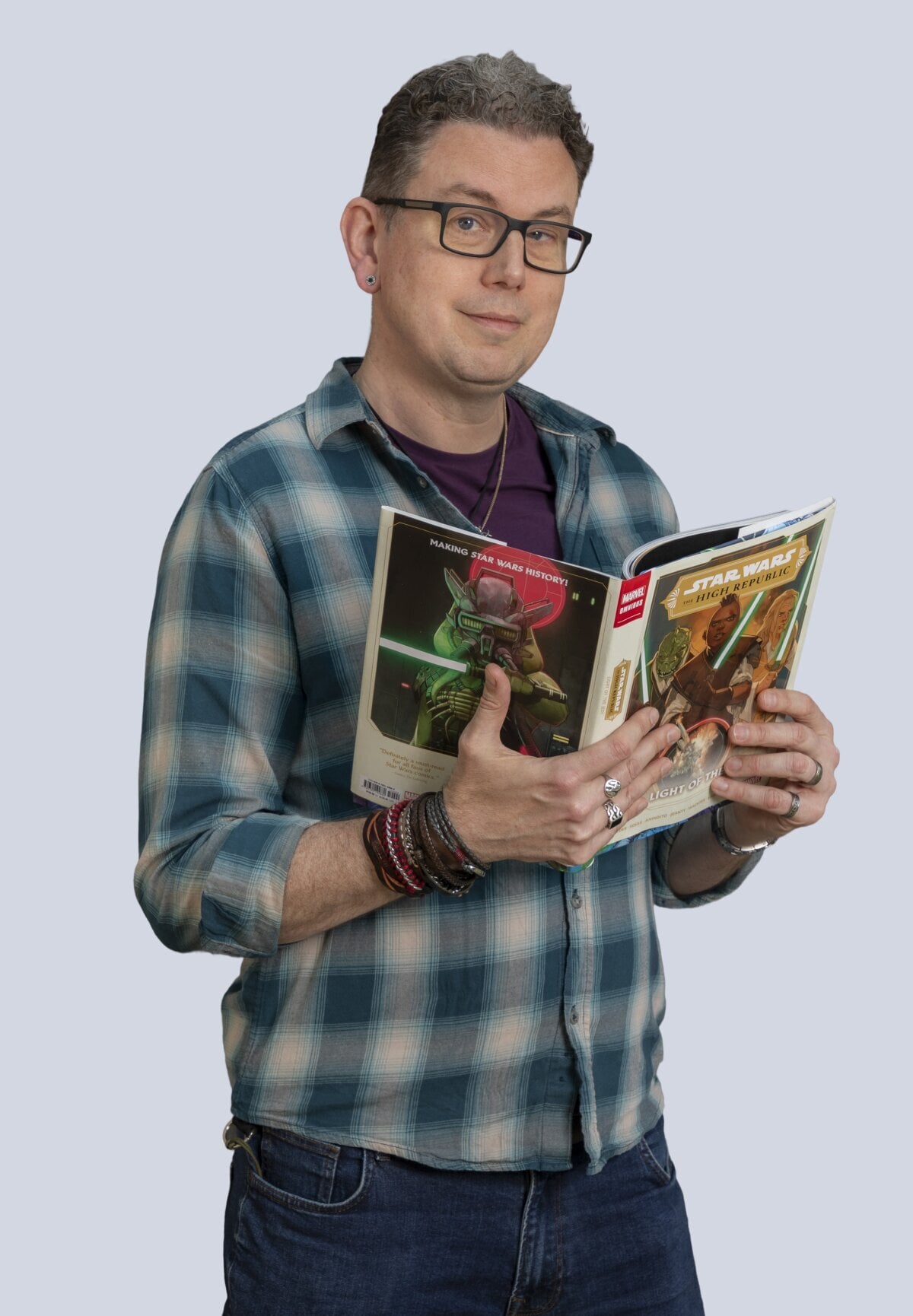
CAVAN SCOTT
LinkedIn Profile- New York Times bestselling author who writes for major global publishers including Marvel, DC, Dark Horse, IDW, Legendary, and 2000AD
- Serves as one of the key story architects behind Lucasfilm’s Star Wars: The High Republic
- Created stories for iconic franchises including Superman, Batman, Flash, Aquaman, Wonder Woman, Venom , She-Hulk, Star Wars, Doctor Who, Transformers, and Assassin’s Creed
- Developed original creator-owned comic titles across horror, sci-fi, and superhero genres
- Writes comics, novels, television episodes, and award-winning audio dramas across multiple mediums
- Collaborates professionally with editors, artists, and major entertainment studios on global IP
- Brings decades of real publishing and storytelling experience into a practical, industry-focused learning environment
Get oriented in the world of comic writing and understand how the course will take your ideas from rough concepts to pitch-ready stories. Meet your instructor, explore the learning roadmap, and unpack the assignments and final capstone project.
- Meet your instructor & classmates
- Course structure & learning journey
- Assignments & capstone project overview
Explore how comics work across cultures, genres, and publishing models while discovering where your own voice fits within the medium. Learn how comic writers collaborate inside creative teams and what makes comics such a distinct storytelling form.
- Global comic traditions: US, UK, Europe, and Manga
- Popular genres & audience categories
- Creator-owned vs. work-for-hire comics
- The realities of writing for established IP
- Understanding the comic-making team
- The writer’s role in visual storytelling
Assignment #1: Why Comics & Why You?
Learn how to write visually and collaborate effectively with artists to create stronger stories. Understand how professional creative partnerships work — from communication and scripting to ownership and workflow.
- Writing for artists, not readers
- Finding & approaching collaborators
- Creative partnerships & rights discussions
- What artists expect from writers
- Common scripting mistakes writers make
- Visual clarity & panel readability
Build a reliable system for generating story ideas and turning them into compelling narrative engines. Learn how character, conflict, theme, and tension combine to create stories readers can’t stop turning pages for.
- Finding story ideas everywhere
- Character-driven vs. theme-driven concepts
- Using & subverting tropes
- Building an idea library & creative habits
- Constructing strong loglines: The DNA of a story
- Workshop: Analysing a story engine
Assignment #2: The Story DNA
Create layered protagonists, antagonists, and supporting casts driven by emotional flaws, desires, and contradictions. Learn how memorable comic characters are designed to sustain long-form storytelling and audience investment.
- Hero archetypes across genres
- Case Study: Batman
- Building flaws, wounds, & motivations
- Ensemble casts & relationship dynamics
- Supporting character archetypes
- Collaborating with artists on character creation
Assignment #3: Creating a Protagonist
Put character theory into practice by designing a compelling supporting character or villain for your story world. Explore how motivations, archetypes, and emotional tension shape unforgettable comic characters.
- Villain archetypes & narrative roles
- What makes antagonists compelling
- Case Study: Lex Luthor
- Designing character motivations & flaws
- Workshop: Build a supporting character
- Group discussion & creative feedback
Learn how to structure comic stories for maximum momentum, emotional payoff, and page-turn tension. Break down the anatomy of comic arcs and map your own story using proven storytelling frameworks.
- Three-act & four-act story structure
- Character-first storytelling principles
- Building comic arcs across multiple issues
- Cliffhangers & pacing techniques
- Case Study: Iron Man
- Workshop: Structure your own comic arc
(Optional) Assignment #4: Completing the Plot with the Three-Act Structure
Master the fundamentals of comic scripting, pacing, and issue planning while learning how to communicate clearly with artists through professional script formatting and visual direction.
- Planning a single comic issue
- Managing pacing & page turns
- Different comic script formats
- Writing effective panel descriptions
- Formatting essentials & lettering counts
- Continuity, foreshadowing, visual flow
Assignment #5: Planning Your Issue
Write dialogue that feels natural, purposeful, and emotionally charged while mastering the technical conventions unique to comics. Learn how strong dialogue reveals character without overcrowding the page.
- The rules of believable dialogue
- Brevity & rhythm in comic writing
- Writing subtext & emotional tension
- Dialogue formatting & technical conventions
- Thought bubbles vs. narration
- Workshop: Creating a scene
Assignment #6: Writing Opening Pages
Strengthen your dialogue instincts through practical writing exercises focused on conflict, emotion, and character voice. Learn how to make scenes feel alive without relying on exposition dumps.
- Workshop: Breakout writing exercises: Scene prompts & challenges
- Writing conflict & emotional tension
- Crafting believable exposition scenes
- Developing distinct character voices
- Peer feedback & revisions
Learn how to package your comic into a compelling professional pitch that communicates both creative vision and commercial potential. Understand what publishers look for and how to stand out.
- The anatomy of a comic pitch
- Writing taglines & story hooks
- Defining tone, comps, audience
- What art materials to include
- Pitching creator-owned vs. IP projects
- Workshop: Present your tagline
(Optional) Assignment #7: Draft Pitch Document
Understand the professional realities of comic production and learn how to navigate feedback, revisions, and editorial collaboration without losing your creative voice.
- The role of editors in comics
- Handling notes professionally
- Finding the “note behind the note”
- The comic production pipeline
- Post-script responsibilities for writers
- Working with covers, lettering, solicits
Assignment #8: Completing Your Script
Gain insider insight into how editors evaluate stories and learn practical editing techniques to improve narrative clarity, pacing, and storytelling impact.
- Guest editor insights & experiences
- What editors look for in scripts
- Common storytelling problems
- Improving visual readability
- Workshop: Editing for clarity
Assignment #9: Editing Your Script
Explore the realities of building a sustainable comic-writing career, from self-publishing and networking to personal branding and long-term creative resilience.
- The realities of freelance comic writing
- Different publishing & career paths
- Breaking into the industry repeatedly
- Building an audience & creative community
- Professional social media & networking
- Growing visibility through podcasts & platforms
What our students say
"I really enjoy the format of the course. Lectures with real life examples and an ongoing case study. Also built in 20 minutes at the end of each class for questions is helpful."

"Overall I'm impressed with the level of detail and explanation around particular topics and subjects. There's a real depth to each module which for learning allows the information to stay in your brain."

"The group activities, they allow us to interact and exchange ideas, plus the way it is structured is challenging and mind twisting as we collaborate in different parts of the ideation."

"I enjoyed the structure of the class. I like how we learned about a topic and practiced it in the workshops. It’s helped me to apply what I learned!"