- MAIN PAGE
- – elvtr magazine – The Math of Comics: Structuring an Epic Plot Within Strict Page Limits
The Math of Comics: Structuring an Epic Plot Within Strict Page Limits
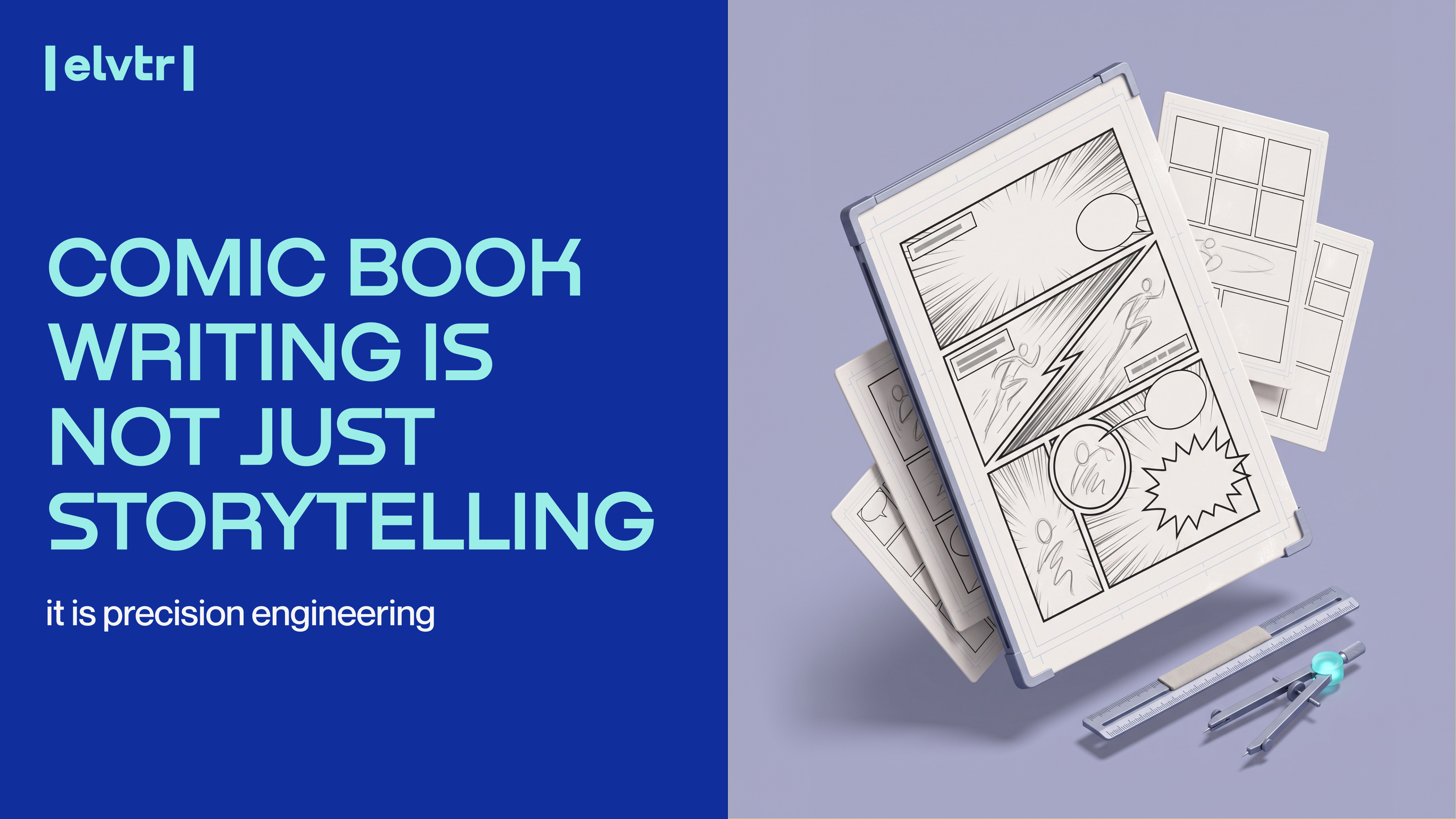
This article explores how generative algorithms are fundamentally reshaping the design of physical products, from optimising hardware ergonomics and material efficiency to creating complex structures for advanced manufacturing. Industrial designers are now using AI as a creative partner to build a smarter, more sustainable, and human-centered tangible world.
The Architecture of a Single Issue
The standard 22-page comic is a marvel of narrative efficiency. It’s a format born from the economics of printing and distribution, yet it has evolved into a powerful storytelling engine. For a writer, these 22 pages are not a limitation; they force clarity, demand discipline, and reward precision. To master this form is to master the art of compression, learning to deliver a complete, satisfying emotional experience in a space most prose writers would consider a brief chapter. It almost always follows a classical three-act structure, but one that is hyper-condensed. Understanding this blueprint is the first step toward controlling the reader’s journey.
Act I: The Hook (Pages 1-5)
The first five pages have the primary job to seize the reader's attention. This is where you establish the immediate status quo, introduce the central conflict of the issue, and present the inciting incident. Page one, panel one, must drop the reader directly into the world and the story. Often, this is achieved through an in media res opening — starting in the middle of the action.
- Page 1: This is your single most important page. It must be visually and narratively arresting. A full-page splash or a dynamic multi-panel sequence can establish tone, character, and setting instantly. It needs to pose a question that the reader feels compelled to answer. Who is this character? Why are they in this situation? What is about to happen?
- Pages 2-3: Here, you expand on the opening. You provide context for the initial hook, introduce key supporting characters, and clarify the stakes. This is often a good place for a critical page-turn reveal, where the true nature of the issue's problem becomes clear as the reader moves from page 3 to page 4.
- Pages 4-5: The inciting incident should be locked in by page five. The protagonist has a clear, immediate goal, and the antagonist or obstacle is established. The reader knows what this specific story is about and why they should care. Act I ends with the protagonist committing to a course of action, pushing the narrative into the second act.
Act II: The Confrontation (Pages 6-17)
Act II is where the protagonist attempts to solve the problem introduced in Act I, only to face escalating complications. The conflict deepens, the stakes are raised, and the character is tested. This section is all about rising action and building tension.
- Pages 6-10: The initial attempts to resolve the conflict. The protagonist might have a plan, but it will inevitably go wrong or prove insufficient. This is where you introduce subplots, reveal new information that complicates the main plot, and showcase the antagonist's power or cunning. Each sequence should end with a minor setback or a new question, driving the reader forward.
- Pages 11-12 (The Midpoint): Around the center of the book, a significant shift must occur. The protagonist might discover a terrible truth, suffer a major defeat, or realise the problem is far worse than they imagined. This inevitably forces the hero to recalibrate their entire approach. The stakes are now personal and irreversible.
- Pages 13-17: The aftermath of the midpoint. The protagonist is at their lowest point, but they must rally. This is where they formulate a new, riskier plan. The pacing often accelerates here, building towards the final confrontation. The writer uses a series of escalating challenges to push the hero toward the climax, ensuring that the tension is wound as tightly as possible before the third act begins.
Act III: The Resolution (Pages 18-22)
The final act is a sprint. It’s where the issue’s central conflict comes to a head. The pacing is fast, the panels are dynamic, and every action has a consequence.
- Pages 18-20 (The Climax): This is the final battle, the moment where the protagonist faces the antagonist directly. The action should be clear, visually exciting, and resolve the core question of the issue. Will the hero succeed? The outcome of this conflict should be decisive, even if the larger war is far from over.
- Pages 21-22 (The Fallout and Cliffhanger): The climax is over, but the story is not. Page 21 is for the immediate aftermath — a moment of reflection, a quiet beat where the characters and the reader can process the events of the climax. But page 22 has a different job. It must set up the next issue. It ends on a shocking reveal, a new threat, or a haunting question that re-contextualises everything the reader just experienced. It’s the promise that the story is bigger than these 22 pages.
Recommended courses

The Currency of Time: Budgeting Panels
If pages are the architecture of a comic, panels are the currency of time. The writer, in collaboration with the artist, has absolute control over how quickly or slowly the reader experiences the story. This process is not intuitive, it’s calculated. The number of panels on a page directly manipulates the reader's perception of time.
An average comic book page contains between four and six panels. This is a comfortable, standard rhythm that allows for a steady flow of information and action. But deviating from this average is where true mastery lies.
- Slowing Down Time (6-9 Panels): When you want to focus on a rapid sequence of events or break down a single moment into its constituent parts, you increase the panel count. A nine-panel grid, famously used in comics like Watchmen, forces the reader to slow down. Each panel contains a small, discrete piece of information. This is perfect for depicting a complex action sequence where every micro-action matters, or for a tense conversation where every subtle shift in expression is critical. The reader’s eye has to move from panel to panel, and this physical act of reading translates into a subjective slowing of narrative time.
- Speeding Up Time (2-3 Panels): Fewer panels per page create a sense of speed and scale. A three-panel page might show a character making a decision, taking an action, and then seeing the immediate consequence. The flow is faster, more cinematic. This structure is excellent for montages, travel sequences, or building momentum toward a major event. The reader consumes the information on the page more quickly, which makes the story feel like it’s accelerating.
- Freezing Time (The Splash Page): The most powerful tool for manipulating time is the splash page — a single panel that takes up the entire page. A splash page is a full stop. It halts the narrative to present a single, monumental image. It’s used for moments of maximum impact: a hero’s dramatic entrance, the reveal of a villain’s lair, a shocking death, or a breathtaking vista. By dedicating an entire page to one moment, you are telling the reader: “This matters. Stop and look. This is the moment everything changes.” The double-page spread is even more powerful, using two full pages to create an awe-inspiring, cinematic beat that becomes an anchor in the reader’s memory.
Writing a comic is more than just writing dialogue and action. A script should suggest panel counts, such as "Page 5 (6 panels)" or "Pages 8-9 (Double-Page Spread)". This budgeting ensures the pacing is deliberate, that moments of high action feel frantic and moments of quiet reflection feel still. It is the core mathematical exercise of comic writing.
Engineering the Page-Turn Reveal
In a digital world of infinite scrolling, the physical act of turning a page is a unique and powerful storytelling device. It is the most important moment in a comic: the transition from a right-hand page to a left-hand page.
A reader cannot see what is on page 4 while they are reading page 3. This blindness is a tool. The end of every odd-numbered page is an opportunity to create suspense. The reveal on the subsequent even-numbered page is the payoff. This is the fundamental rhythm of a well-paced comic: question on the right, answer on the left.
- The Setup (Odd-Numbered Pages): The bottom-right panel of an odd-numbered page is the most critical real estate in the issue, second only to the final page cliffhanger. This panel must create narrative tension. It can be a line of dialogue that poses a question ("What was that noise?"). It can be a character looking off-panel at an unseen threat. It can be the sound effect of a door creaking open. Whatever it is, its purpose is to make turning the page an act of necessity.
- The Payoff (Even-Numbered Pages): The following even-numbered page delivers the answer. The noise was a monster. The unseen threat is the main villain. Behind the door is a long-lost ally. This reveal can be a shock, a relief, a joke, or a moment of horror. The impact is magnified because the writer and artist have controlled the exact moment the reader receives the information.
This technique is used constantly, on nearly every spread. It keeps the reader engaged and actively participating in the story. Mastering the page-turn reveal is what separates an amateur script from a professional one. It is a constant, deliberate process of creating and resolving micro-tensions that keep the narrative engine firing on all cylinders.
Don't let page limits suffocate your story. Master the precise formulas of comic book pacing and structural design in our comprehensive Comic Book Writing course.
The Finality of the Cliffhanger
While the page-turn reveal creates momentum within the issue, the final cliffhanger serves a different, more vital purpose: it sells the next issue. The last page is a promise and a threat. It promises a thrilling continuation of the story and threatens the reader with the agony of not knowing what happens next.
The best cliffhangers are revelations that re-contextualise the entire story. They change the reader’s understanding of the characters, the plot, or the world itself.
- The Revelation Cliffhanger: The hero discovers a devastating truth. Their mentor is secretly the villain. Their entire mission was based on a lie. A dead character is revealed to be alive. This type of ending attacks the emotional and intellectual core of the story, leaving the reader questioning everything they thought they knew.
- The Impossible Choice Cliffhanger: The protagonist is forced into a no-win situation. They can save their friend or save the city, but not both. This creates deep character conflict and forces the reader to ask, "What would I do?" The suspense comes from character, not just plot.
- The New Threat Cliffhanger: Just when the hero has defeated the main villain and the reader feels a sense of relief, the final page reveals a far greater threat looming on the horizon. This effectively tells the reader that the victory they just witnessed was only temporary, and the worst is yet to come.
Writing a comic is an act of architecture; building a structure that can support a powerful emotional experience. The 22-page limit, the panel grid, the page turn — these are the tools you use to build. By understanding the math, the rhythm, and the precise mechanics of the form, you gain the freedom to tell any story you can imagine, one perfectly paced page at a time.